Ideas Post
Time Travel in Marketing: How Customers Experience Brands Today
Time travel in marketing can bring years of brand content into the same customer journey. See why older blogs, social posts, reviews, and current messaging all need to feel connected.

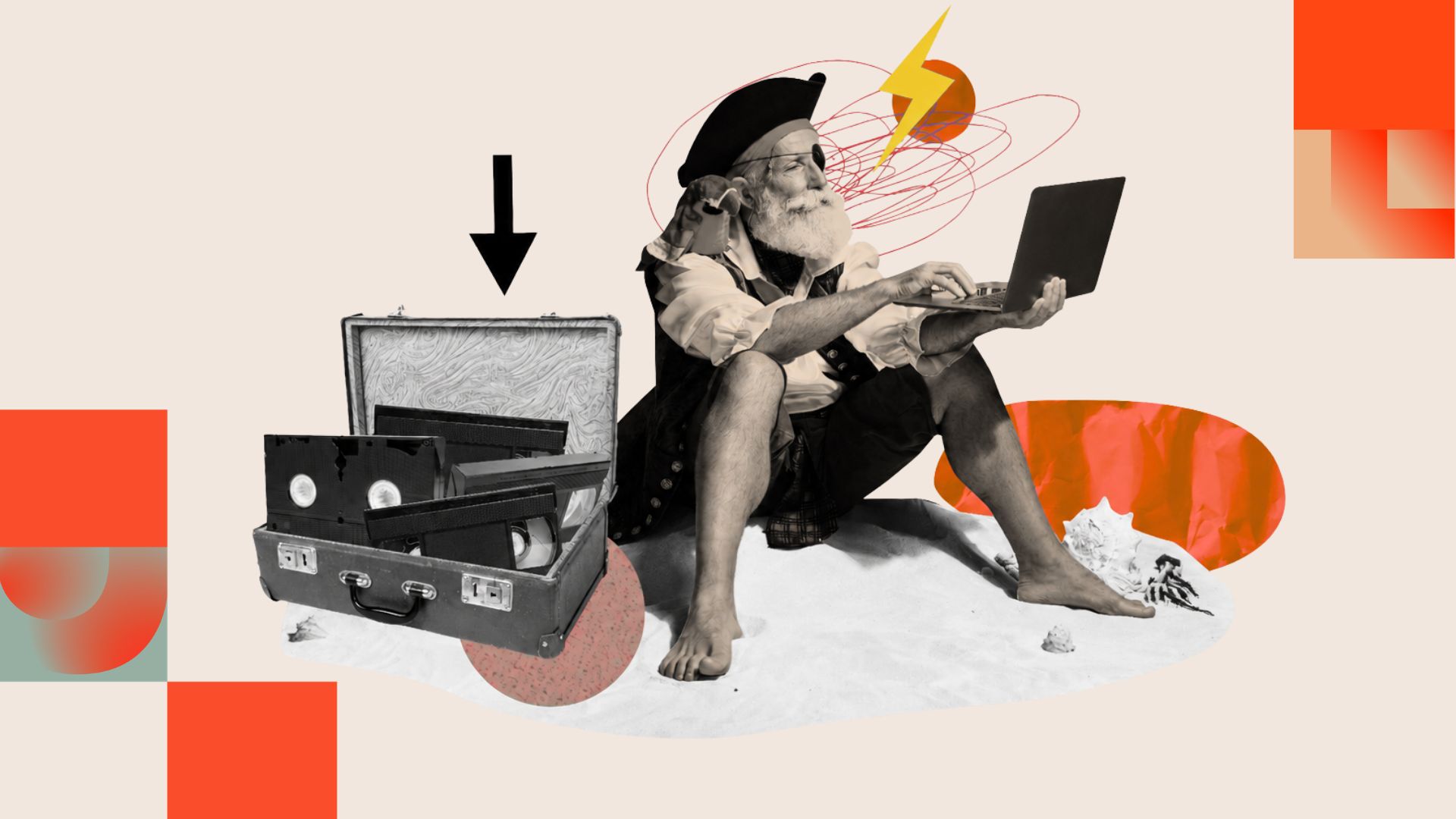
Most companies spend years building their brand, yet someone discovering it today can experience years of that work in a single sitting. A business that took a decade to grow can now be explored through old blogs, recent projects, social posts, reviews, and everything else it's put online, giving customers the chance to see different points in its history without ever following the timeline.
It happens pretty naturally when you think about how we research anything now. You see a company on TikTok, look it up on Instagram, tap the link in its bio, browse the website, read a blog that catches your attention, then head to Google to see what other people have said. Somewhere along the way, you might watch a YouTube video uploaded four years ago or end up on a project page the company hasn't promoted in months. Those pieces didn’t all come from the same moment, and most of the time you’re not really thinking about when each one was made. You’re just piecing together an opinion of the company from whatever you happen to find.
I've started thinking of this as a kind of time travel in marketing. Years of work can sit a few clicks apart, and the order is mostly up to whoever is doing the searching. For marketers, that means stepping back and actually looking at everything a brand has put out there, not just what’s new. Someone researching you today can easily run into different eras of your business all at once, so those eras need to still feel like they belong to the same place.
Marketing Still Assumes a Timeline That No Longer Exists
For years, marketers have invested enormous effort into designing customer journeys. Awareness comes first, then consideration, then hopefully a conversion. That framework helps explain intent, but real research is far less orderly once people are using Google, social media, reviews, and AI.
Google's Decoding Decisions research gives a better picture of what happens between discovery and purchase. Its researchers describe a "messy middle" where consumers move back and forth between exploration and evaluation, adding options and information before narrowing them down again. In practice, people don’t move through research and decision-making in a straight line. They bounce between looking things up and weighing options, circling back as new information comes in.
That makes the different pieces of a brand much more important during the research process. Your website might answer one question while an Instagram post answers another. A review could send someone back to a service page, and a blog could introduce expertise they didn't know to look for in the first place. Instead of assuming each channel belongs to a particular stage, marketers need to make sure each one gives people enough accurate information to keep researching wherever they happen to land.
Consistency Has More to Hold Together
Brand consistency is often easiest to spot visually, but customers are also picking up on what a company says, how it says it, what it chooses to talk about, and whether those things hold together as they move between platforms. A website can have the right logo and colors and still feel disconnected from the company someone just encountered on socials.
Rhode is a strong example of this because its branding carries across channels without feeling forced. The product photography on its website, the close-up visuals on Instagram, the casual beauty content on TikTok, and the language around its products all share the same stripped-back aesthetic. Each platform looks different by design, but the underlying personality stays consistent no matter where you encounter it.
For businesses managing years of content, that kind of consistency depends on brand guidelines that go further than visual rules. Voice, positioning, photography, messaging priorities, terminology, and even the claims a company makes about itself need enough definition that different people can create at different times without slowly pulling the brand in different directions.
A useful test is to pull up content from several points in your company's history at the same time. Compare an older blog with a current service page, a recent social post, a case study, and the reviews customers are leaving. The design can evolve and the writing should get better, but the central idea of who you are shouldn't require five different explanations.
The Internet Loves Bringing Old Things Back
Social media has made resurfacing content a constant pattern. An older song can suddenly climb the charts again after taking off on TikTok, and clips from shows, interviews, and YouTube videos regularly circulate years after they were first released. The same thing happens to brands. Once something is published, it does not really disappear.
A well-written blog can keep ranking in search years later. An old campaign can resurface and bring in new traffic. A YouTube tutorial can keep answering questions long after the team that made it has moved on. Search and share behavior give content a much longer life than any campaign calendar accounts for.
AI has made this even more noticeable, not by changing the idea, but by speeding up how often it happens. Tools like ChatGPT, Google’s AI Overviews, and recommendation systems do not just respond to direct searches. They pull in context, summarize information, and reintroduce older content in new ways, often without the user having to look for it directly. Adobe found that 38% of consumers have already used generative AI for shopping research, with more than half using it to evaluate options before making a decision. That means brands are not only competing for attention in the moment, but with everything they have ever published, all at once, as AI decides what gets surfaced and what gets ignored.
Old Content Deserves a Second Look
Content calendars naturally keep teams focused on what's going out next, but an SEO audit can tell you which older work is still earning attention. If three-year-old content continues generating impressions or a blog keeps ranking for a useful keyword, what matters more is that people are still landing on it.
A better habit is to make older content part of regular brand maintenance. Check whether the search intent has changed, replace outdated statistics, fix broken links, strengthen internal linking, update the meta description when needed, and make sure the CTA points toward something the business actually wants people to do today. If the blog discusses a service that has changed, the copy should reflect that too. This gives marketers a practical way to maintain the brand's history without treating every old page as something that needs to be rewritten.
The goal isn’t to make all past marketing look new, but to show clear progress over time. A strong brand should improve creatively while evolving in ideas and communication, without losing its core identity. People should be able to move from older work to newer work and still recognize the same brand, seeing how it’s developed instead of wondering when it became something else.
Try Googling Yourself Like You Don't Work There
A brand review can become much more useful when you stop following the paths you already know. Search the brand name, see which pages actually appear, open the social profiles that rank, read a few Google reviews, and click an older blog that still shows up. Search important services without using the company name and see which page represents you there. You can also ask a few AI tools basic questions about the brand and compare what they return with the positioning you're trying to communicate.
As you go, look for specific disconnects rather than trying to decide whether everything simply "feels consistent." An older page may use terminology the team abandoned years ago. Instagram might communicate the personality better than the website. A blog may still rank for a valuable query but send readers to an outdated service page. Reviews might repeatedly mention a strength that barely appears in the brand's own messaging. Each of those findings gives the marketing team a concrete decision to make.
What Time Travel Changes for Marketers
Time travel in marketing is useful because it forces us to look beyond whatever is newest. Customers may research extensively, use AI to narrow their options, discover old content through Google, or meet the brand through social media first. We can't choose the order, but we can make sure the pieces they find still represent the business accurately.
That raises the standard for brand consistency without requiring a brand to stay frozen in place. Strong guidelines give designers, writers, social teams, and marketers enough direction to keep the identity recognizable while the work itself gets better. Regular SEO and content reviews keep older pages useful, and looking at the brand across channels helps catch inconsistencies before customers are the ones connecting them.
At Tribu, strategy gives creative work that foundation. A brand should have room to experiment, grow, and respond to what's happening around it without losing the qualities that made people recognize it initially. When years of marketing can sit side by side in the same search, keeping that foundation clear is what allows that ongoing change to work in your favor.
Let's build a tribe together
Ideas, Ideas, Ideas
How to Write Social Media Captions People Actually Read
Good social media captions do more than describe the post. They sound human, create curiosity, and give people a reason to stop scrolling and keep reading.

Why More Leads Is Not Always Better
More leads do not always mean better results. Learn why lead quality, sales feedback, and what happens after the form matter when evaluating campaign performance.
How to Write Blogs People Actually Want to Read
Learn how to write blogs people actually want to read with audience-focused topics, clear structure, and smart SEO strategy.
Featured Work
We don’t just deliver - we make a difference.
Here’s a look at some of our most impactful branding, web, and campaign work. These aren’t just projects - they’re proof of what’s possible when bold ideas meet the right tribe.