

Many websites follow the same template. I’m sure you’ve seen it: a big hero image at the top, feature icons, a testimonial slider, and a “Contact Us” button.
There’s a reason that layout exists. It’s safe, recognizable, and for lead-generation sites, it works. But there is a fine line between "reliable" and "invisible." In an era where everyone is chasing the same trends, the biggest risk a brand can take isn't necessarily being different, but looking exactly like everyone else.
Trends are great for a quick hit of engagement, but they have a shelf life. We don’t always know which design trends will stand the test of time and which will make a site look dated in eighteen months. To me, the most inspiring websites are the ones that ignore trends entirely.
When I stumble upon a site that breaks the mold, I don’t just see a list of services; I have an experience. It’s the moment when I literally say “oh, that’s cool;” the feeling of excitement when a designer does something I never would have thought of. It turns a routine visit into something memorable.
In this post, I want to dive into a few sites that are currently living in the back of my mind. We’ll look at how they use unique structures, brutalist aesthetics, and micro-interactions to rewrite the rules, and we’ll talk about when it’s time to stand out and when it’s time to follow the script.
Category 1: Unique Structure
The "Awe-Inspiring" UX of Bureau Cool
As a boutique design studio, Bureau Cool knows their audience isn't looking for "standard." They are looking for a creative partner who can strike awe into their clients. Their site structure reflects that mission from the second the page loads.
Breaking the Hero Convention
Instead of a static image or a looping video of people in an office, their hero section features an interactive graphic representing real-time traffic to their site from around the world. It’s a literal "live" experience that makes you feel like you’ve entered a living digital ecosystem.
Why It Works (and the Risks)
The navigation is where they truly break the mold. There is no top bar; instead, a white orb follows you on the right side of the screen. Hovering over it reveals anchor links that takes you through their one-page layout.
I’ll be honest: you have to be careful with this level of experimentation. This is where visitors are most likely to get confused. But here, it works because:
- The "Ghost" Interaction: As you scroll through project highlights, a ghosted thumbnail of the project stretches across the entire background. It’s a "cool" factor rarely seen. This makes the work feel massive and immersive.
- The Strategic Reveal: By hiding the menu behind an orb, they force you to focus on the visuals first. It turns the simple act of browsing into a discovery mission.
The Takeaway
Bureau Cool isn't trying to sell you a quick product; they are selling you their vision. I never would have thought to make a work section feel so ethereal or a navigation so minimal. It’s a reminder that when you’re a creative brand, your website shouldn’t just show your work, it should be your work.
Category 2: Brutalism & Anti-Design
The Raw Utility of Stone Island
When we think of "clean" design, our minds usually go straight to the Apple aesthetic: soft shadows, smooth gradients, and perfectly polished lifestyle photography. But Stone Island takes a completely different route. They embrace Brutalism, and the result is striking.
The Art Museum Effect
Stone Island’s website reminds me of a high-end art museum. In a gallery, the walls are intentionally vast, white, and empty because the focus needs to be entirely on the art. Their website does the exact same thing for their clothing. By stripping away every unnecessary design element, the product becomes the only thing that matters.
Rebuffing the Ornamentation
What makes this site "Brutal" isn't that it's messy, it’s that it’s raw. Here is how they break the traditional rules:
- The "One-Size" Rule: All the text on the site is the same-sized mono font. There are no dramatic headers or stylized script fonts. It feels like you’re looking at a technical manual or the "backend" of a site. I feel like this is almost never done, but I think there’s something very pleasing about it.
- A Restricted Palette: Beyond the clothes themselves, you will only see black and white. No "on-trend" pastels or brand colors.
- Zero Decoration: There are no textures, no drop shadows, and no decorative icons. The images are simply placed on a "blank wall."
Why It Works
In 2026, we are constantly bombarded by websites trying to "wow" us with flashy animations. Stone Island stands out by being quiet. It tells the visitor: "Our clothes are the statement. We don’t need the website to do the talking for us."
Category 3: Micro-interactions as Language
The 3D Playfulness of Luis Bizarro
As a Creative Technologist specializing in 3D experiences, Luis doesn't just tell you he can code, he makes you feel it through every pixel.
The "Living" Cursor
The standout feature here is the mouse interaction. We’re all used to a standard pointer, but on this site, the cursor is a dynamic element that interacts with the background in real-time. It uses WebGL and shaders to create a fluid, tactile sensation as you move across the screen.
It’s a perfect example of a micro-interaction serving as a brand's primary language. It doesn't need a paragraph of text to explain that he’s an expert in "real-time 3D experiences" because you are literally having one the moment you move your mouse.
Captivation Through Motion
Why does this work? Because it triggers our curiosity.
- Interactive Feedback: Every scroll and hover provides a tiny hit of dopamine. You want to keep exploring just to see how the site reacts to your next move.
- Functional Proof: For a portfolio, this is the ultimate "show, don't tell." The site itself is the strongest case study he has.
The Takeaway
Micro-interactions aren't just "bells and whistles." When used correctly, they act as a silent guide that makes a visitor feel more connected to the digital space. It transforms a passive viewing experience into an active, captivating one.
Conclusion
When to Break the Rules (and When to Follow Them)
After looking at these sites, it’s easy to get caught up in the excitement of "cool" design. But as a designer, I always have to ask: Does this serve the goal?
The Case for Sticking to the Script
There are many instances where a simple, recognizable structure is the right choice. If you’re building a lead-generation site or a high-traffic e-commerce store where people need to find information in seconds, you want them to feel comfortable and safe. Using familiar patterns builds immediate trust. If a user has to "figure out" how to buy your product, they’ll likely just leave.
The Case for Breaking the Mold
However, if your goal is memorability, brand positioning, or emotional impact, that’s when you take the risk. You break the rules when you want to stand out in a crowded market or when your brand identity is built on being a disruptor.
The secret isn't just being "different," it's being strategically different. It’s about knowing which rules to follow so that when you finally do break one, it actually means something.
Let's build a tribe together
Ideas, Ideas, Ideas
What Is Email A/B Testing and Why Does It Matter?
Email A/B testing replaces guesswork with real audience insights. See what to test, how to structure an effective experiment, and how to use the results to improve future campaigns.

How Do I Get My Business Mentioned by ChatGPT?
Want your business mentioned by ChatGPT? See how schema, reviews, brand mentions, rich media, and first-party data can strengthen AI search visibility.
Time Travel in Marketing: How Customers Experience Brands Today
Time travel in marketing can bring years of brand content into the same customer journey. See why older blogs, social posts, reviews, and current messaging all need to feel connected.
Featured Work
We don’t just deliver - we make a difference.
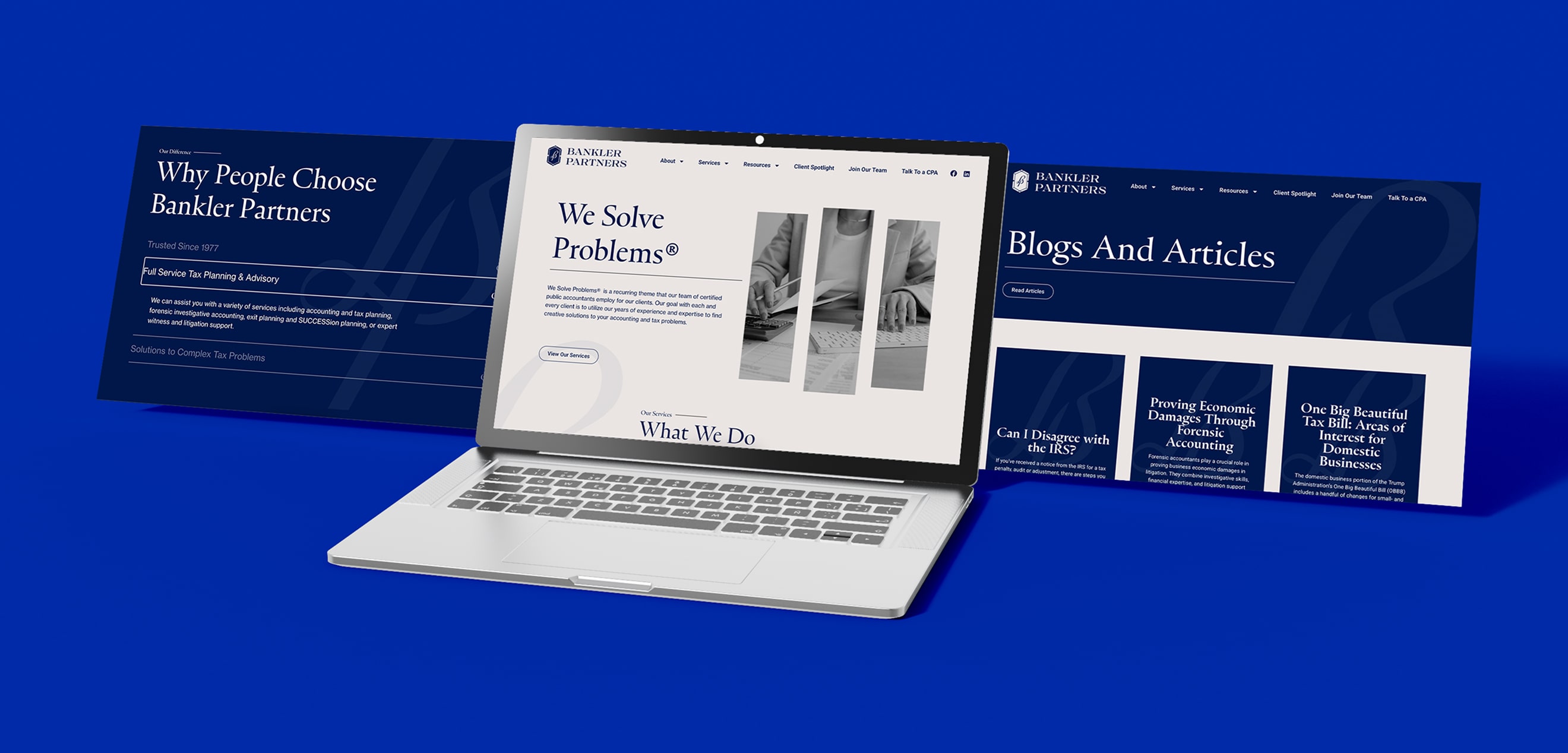
Here’s a look at some of our most impactful branding, web, and campaign work. These aren’t just projects - they’re proof of what’s possible when bold ideas meet the right tribe.



.jpg)
.jpg)


